
Paintless Dent Repair Explained
Paintless dent repair is the industry-leading method for restoring hail-damaged vehicles. Learn how it works, the tools involved, and why it outperforms traditional body shop repairs in every category.
What Is Paintless Dent Repair?
Paintless Dent Repair (PDR) is a specialized technique used to remove dents, dings, and creases from vehicle body panels without disturbing the factory paint finish. Unlike traditional body shop repairs that involve sanding, body filler, primer, and repainting, PDR works by carefully massaging the metal back to its original shape from behind the panel.
Developed in the automotive industry over 40 years ago, PDR has become the preferred repair method for hail damage, door dings, and minor body dents worldwide. Insurance companies actively recommend PDR because it is faster, more cost-effective, and produces superior results compared to conventional repair methods.
The key advantage of PDR is preservation. Because no paint, filler, or chemicals are used, your vehicle retains its original factory finish. This means no color mismatch risk, no Carfax report entries, and no reduction in resale value. The vehicle looks exactly as it did before the damage occurred.
How PDR Works
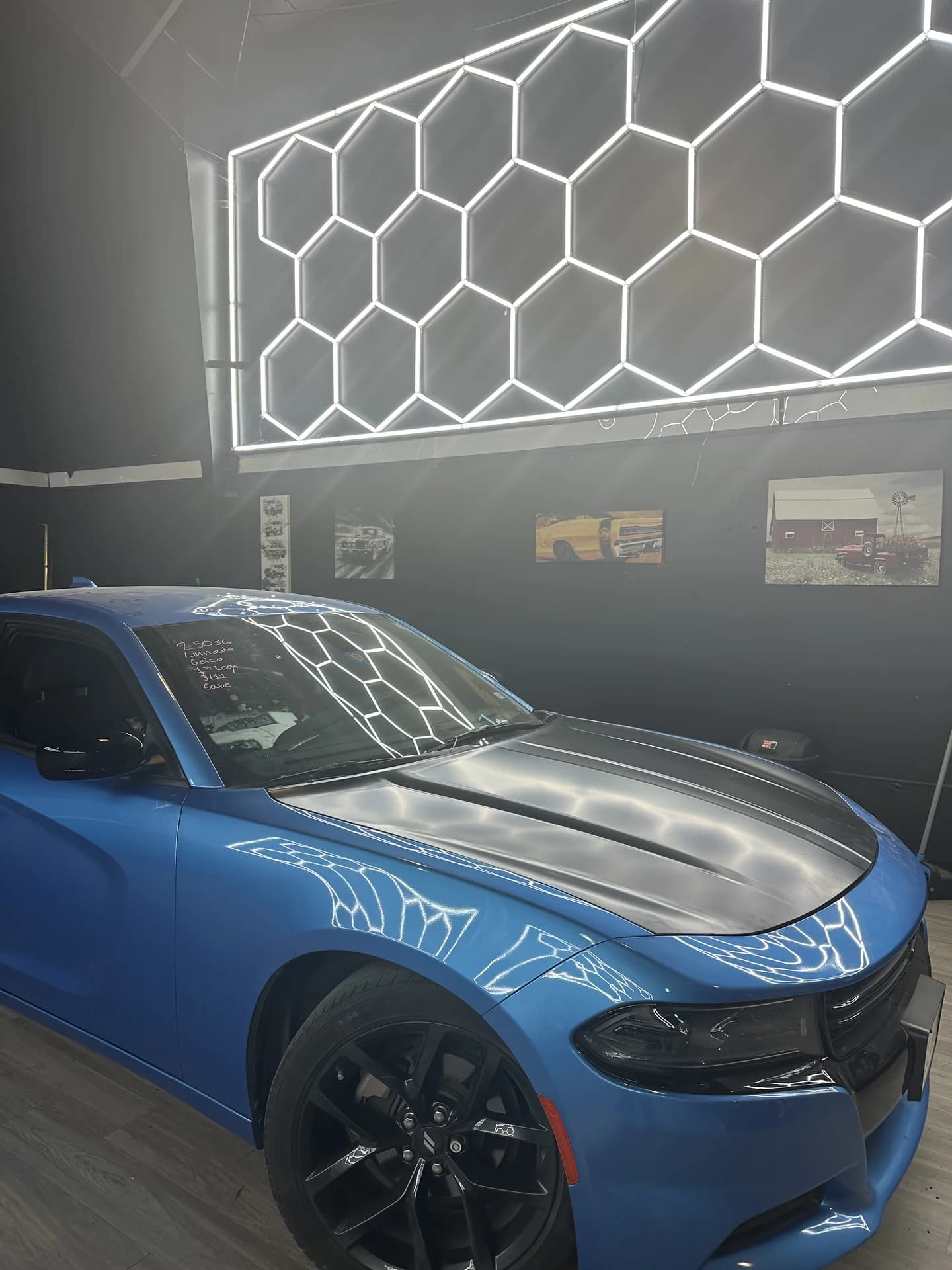
A certified PDR technician begins by carefully assessing each dent using specialized LED line boards that cast reflected light across the panel surface. This reveals the exact size, depth, and location of every imperfection. Even those invisible to the naked eye.
The technician then gains access to the back side of the damaged panel through existing openings in the vehicle body. Such as window edges, door openings, trunk seams, and interior trim access points. Using precision-shaped steel rods, they apply controlled pressure to the underside of each dent, gradually pushing the metal back to its original contour.
For dents in areas where rod access is limited, technicians use glue pulling systems. A specialized adhesive tab is applied to the exterior of the dent, and a slide hammer or mini lifter is used to carefully pull the dent out. Any remaining high spots are then fine-tuned using knockdown tools and blending hammers.
The entire process requires exceptional skill, patience, and precision. A single hail-damaged vehicle may have hundreds of dents, and each one must be individually addressed. This is why certification and experience matter. Our technicians have 10+ years of hands-on PDR experience and hold I-CAR Gold Class certification.
Tools of the Trade
PDR technicians use a specialized set of tools designed specifically for dent removal without paint damage.
PDR Rods
Long, precision-shaped steel rods that reach behind body panels through existing access points to push dents out from behind.
Knockdown Tools
Specialized taps and blending hammers used to fine-tune high spots and achieve a perfectly smooth finish during the repair.
LED Line Boards
High-intensity LED reflection boards that cast precise light across the panel surface, revealing even the smallest imperfections invisible to the naked eye.
Glue Pulling Systems
For areas where rods cannot reach, technicians use specialized glue tabs and slide hammers to carefully pull dents from the exterior surface.
What PDR Can Fix
Paintless dent repair is effective on a wide range of dent types, as long as the paint surface is intact.
Hail Damage
PDR is the industry-standard method for hail damage repair. It can remove hundreds of dents from a single vehicle while preserving the factory paint finish.
Door Dings
Parking lot door dings and minor body dents are ideal candidates for PDR. Most can be repaired in under an hour with flawless results.
Minor Body Dents
Shopping cart dents, sports ball impacts, and other minor body damage can typically be repaired using PDR as long as the paint is not cracked or chipped.
Crease-Free Dents
Round, shallow dents without sharp creases respond best to PDR. Our technicians can assess whether your specific damage qualifies during a free inspection.
PDR vs Traditional Body Shop
See how paintless dent repair stacks up against conventional body shop repairs across every important factor.
| Feature | Paintless Dent Repair | Traditional Body Shop |
|---|---|---|
| Original Paint Preserved | Yes. Factory finish untouched | No. Panels are sanded, filled, and repainted |
| Repair Time | 1-2 weeks for most vehicles | 1-3 weeks typically |
| Cost | 30-50% less than traditional repair | Higher due to materials and labor |
| Vehicle Value | Maintained. No Carfax report impact | Reduced. Repaint history is reported |
| Environmental Impact | No chemicals, fillers, or paint waste | Uses chemicals, fillers, primers, and paint |
| Warranty | Lifetime warranty on all repairs | Varies. Typically limited |
| Color Match Risk | None. Original paint is untouched | Possible color mismatch over time |
See PDR in Action
Schedule a free inspection and let our certified PDR technicians show you what paintless dent repair can do for your vehicle.